Case Study · Winterview
Clarifying Questions
- The problem
- Resume Booster wasn’t getting used. The people who needed it most left out the details that make a bullet land, and the tool had no way to ask for them.
- The call
- I shipped the STAR framework first and usability testing killed it, so I replaced teaching users a structure with asking them one plain question at a time.
- The outcome
- Adoption rose 34% to a 57% rate, with 84% CSAT across 200+ surveyed users.
The problem
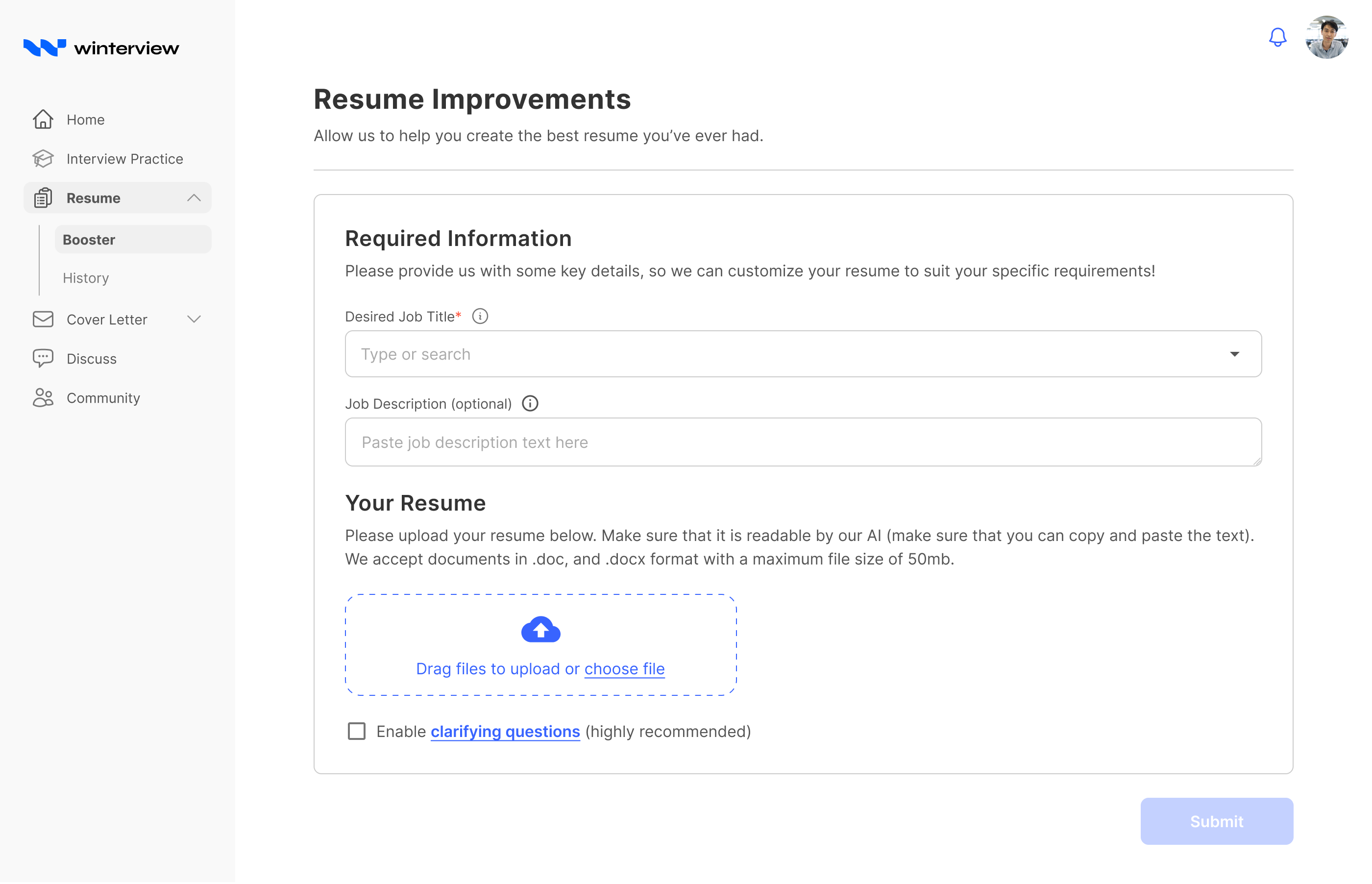
Winterview's Resume Booster turns a user's raw experience into polished resume bullets. It wasn't getting used. The people who needed it most, users who didn't already know resume best practices, were the ones who struggled: they left out the details that make a bullet land, and the tool had no way to ask for them.
The question I set out to answer: how do you help users fill in key information gaps?
Worked on the onboarding experience for the partner portal.
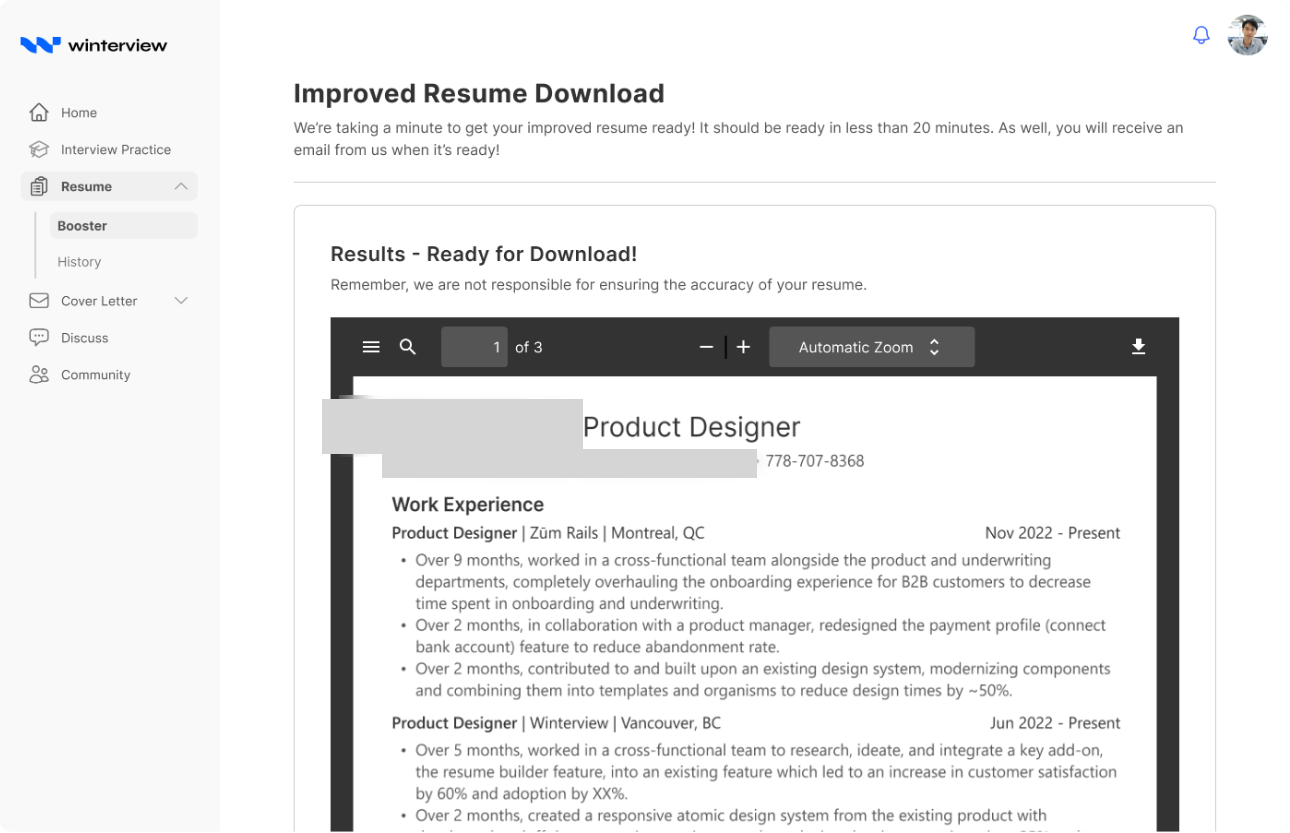
Reduced onboarding time by 39% for all new partners by rebuilding the partner portal setup flow.
Same experience, same person. The gap between them is one question the tool never asked. Example text drawn from the shipped feature.
What didn’t work
The first answer was wrong
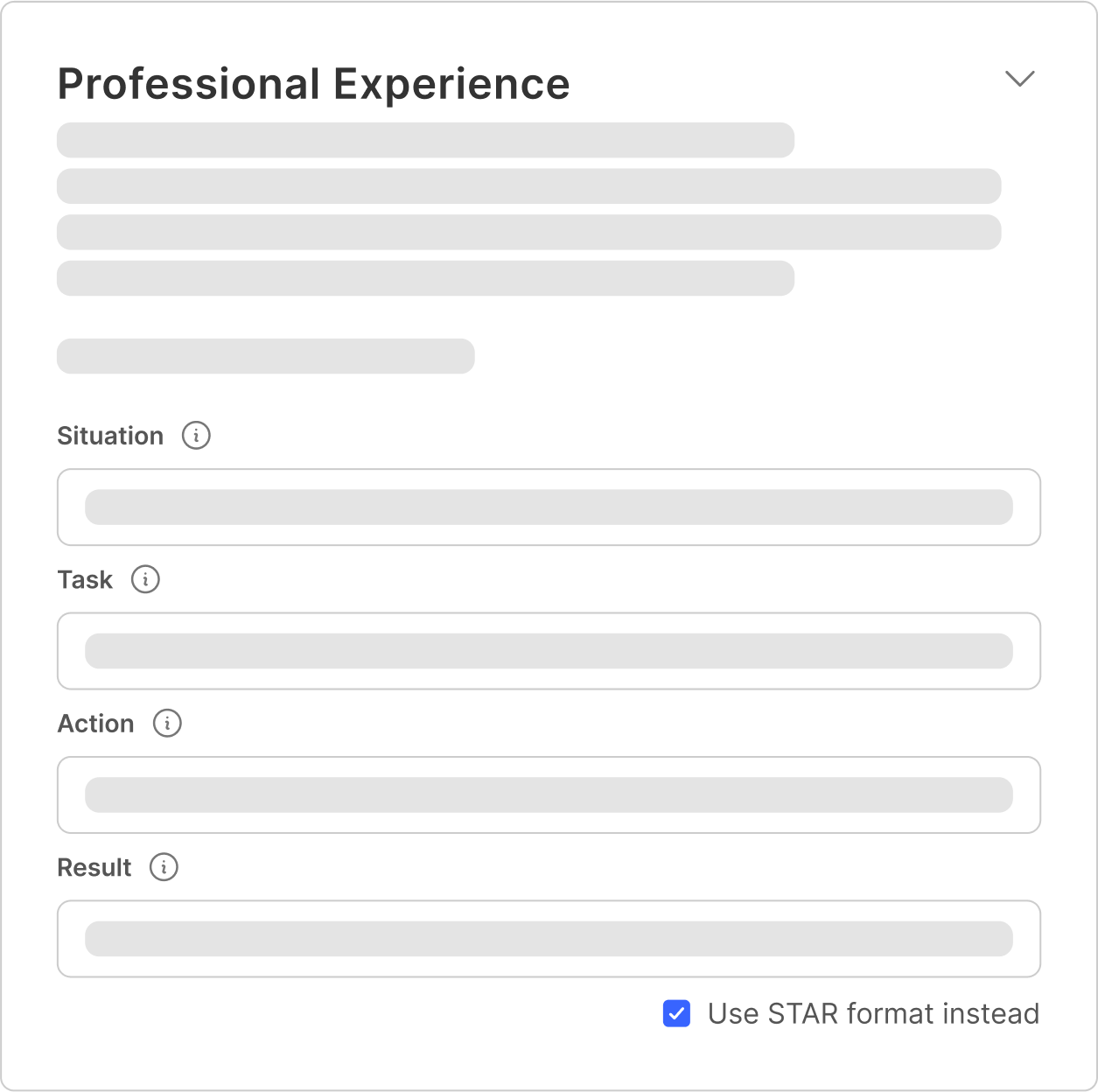
I started with STAR, the Situation-Task-Action-Result framework that resume advice has recommended for decades. Users filled in each element in sequence, and the AI synthesized the four answers into a finished bullet. On paper it was the obvious solution: a proven framework, a clean mapping to model input, an interface that practically designed itself.
What testing found
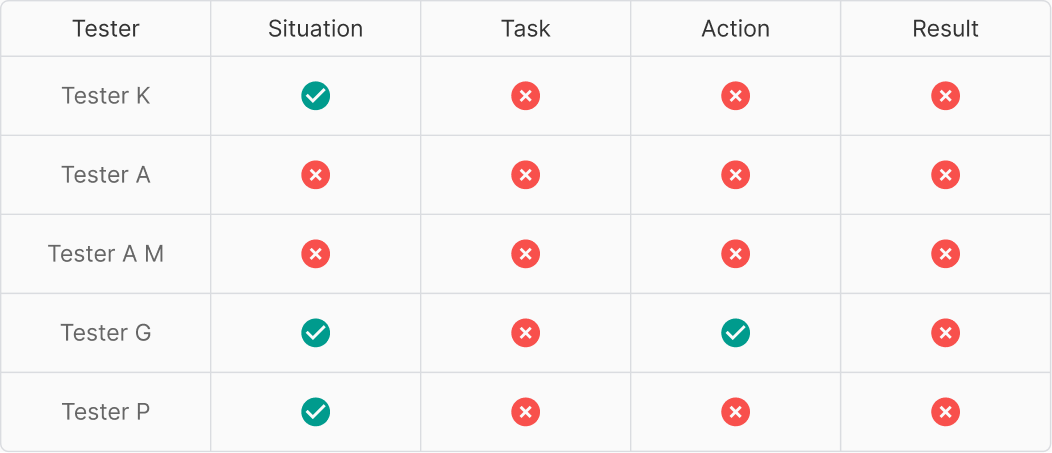
I put the STAR flow in front of users. Three findings came back, none of them survivable:
- It was too much thinking. Users spent up to four minutes on a single field against a two-minute benchmark. Being asked to classify their own experience into “Situation” versus “Task” was harder than writing the bullet unaided.
- Users didn't buy the premise. Many were skeptical the suggestions were worth the effort, and questioned whether their resume was really the problem in the first place.
- The math didn't work. One STAR bullet took about ten minutes. A full resume would have run to roughly ninety. Nobody was going to spend an afternoon on it.
The framework that was supposed to reduce effort had become the effort.
Time to fill one field
Measured in usability testing, against the two-minute benchmark.
| Benchmark | 2 minutes |
|---|---|
| STAR field, measured | up to 4 minutes |
~90 minProjected time to complete a full resume at roughly ten minutes per STAR bullet.
What I shipped instead
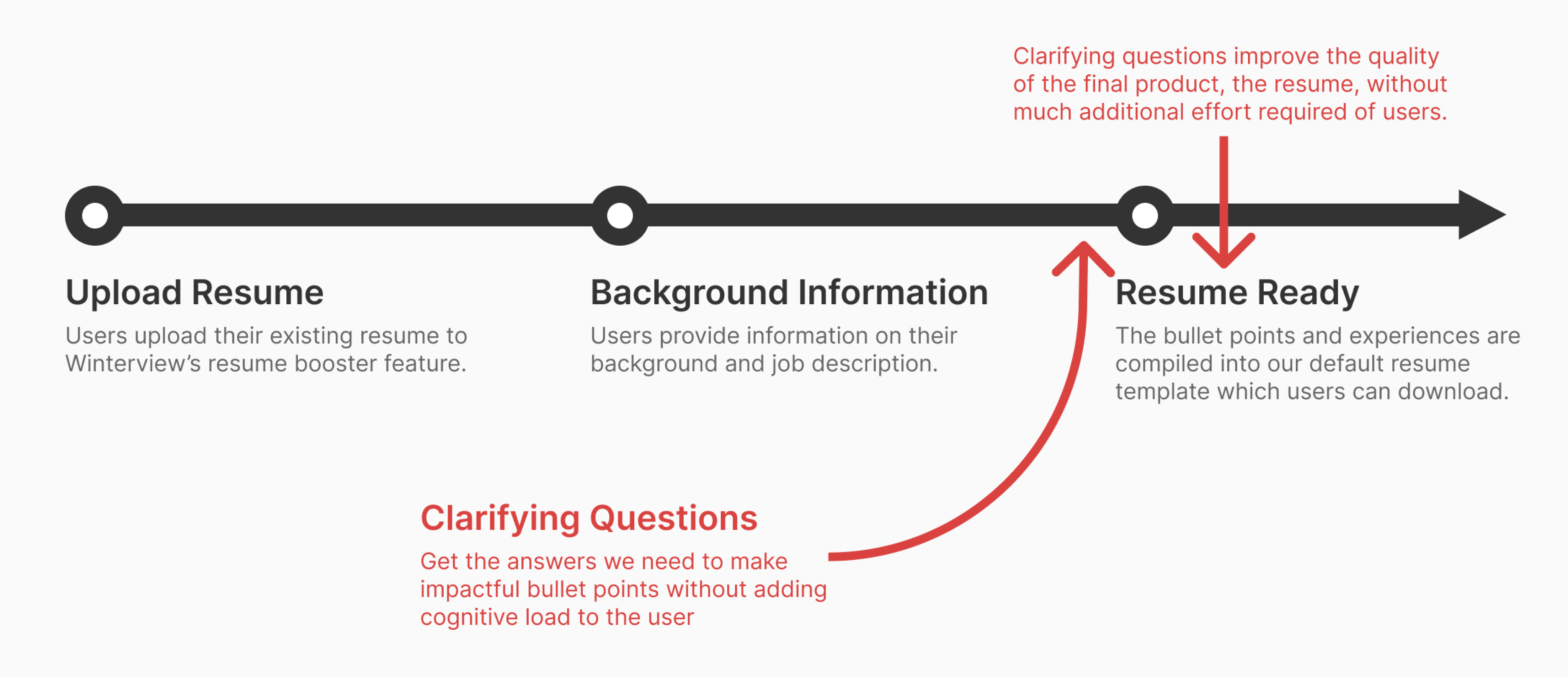
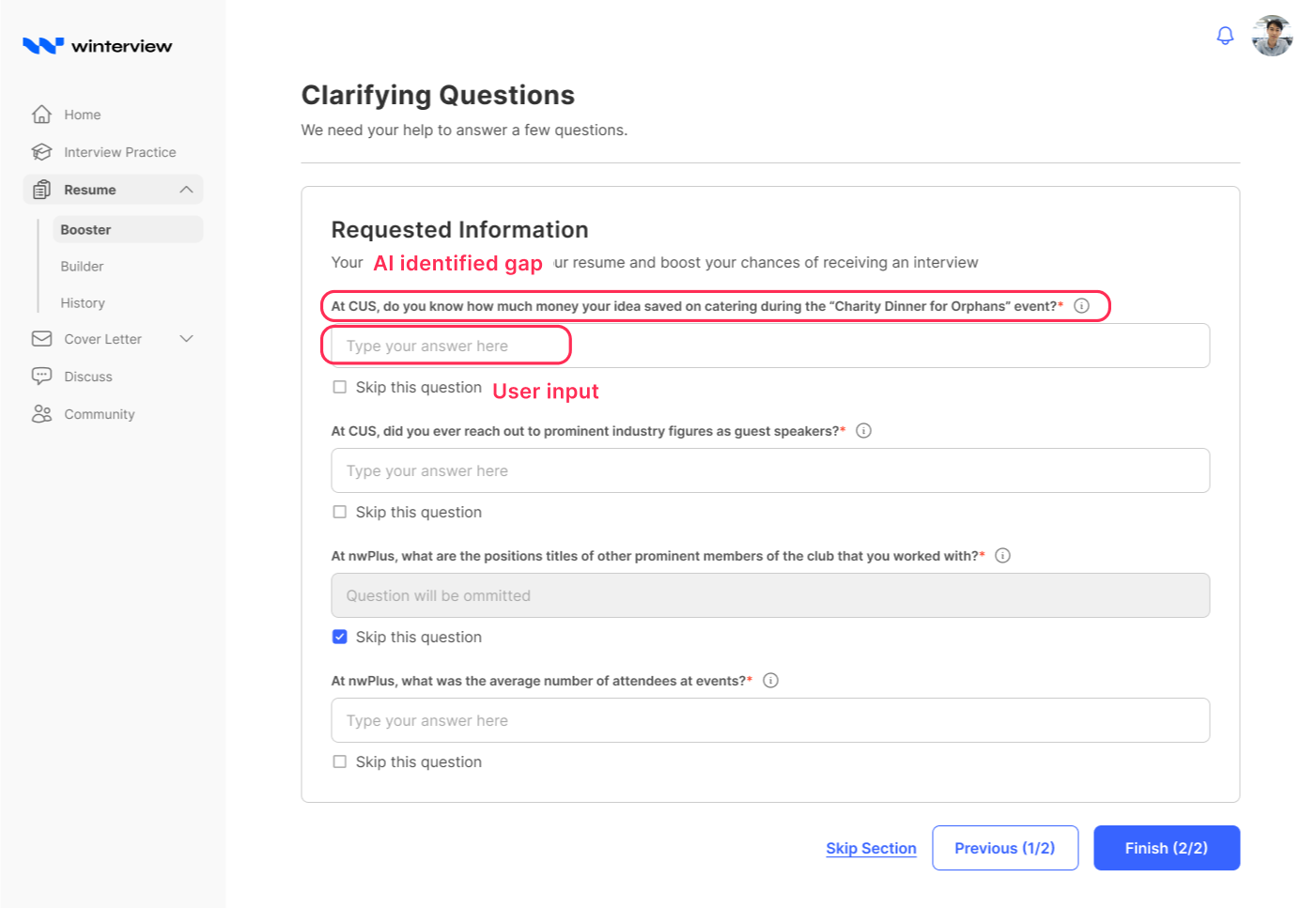
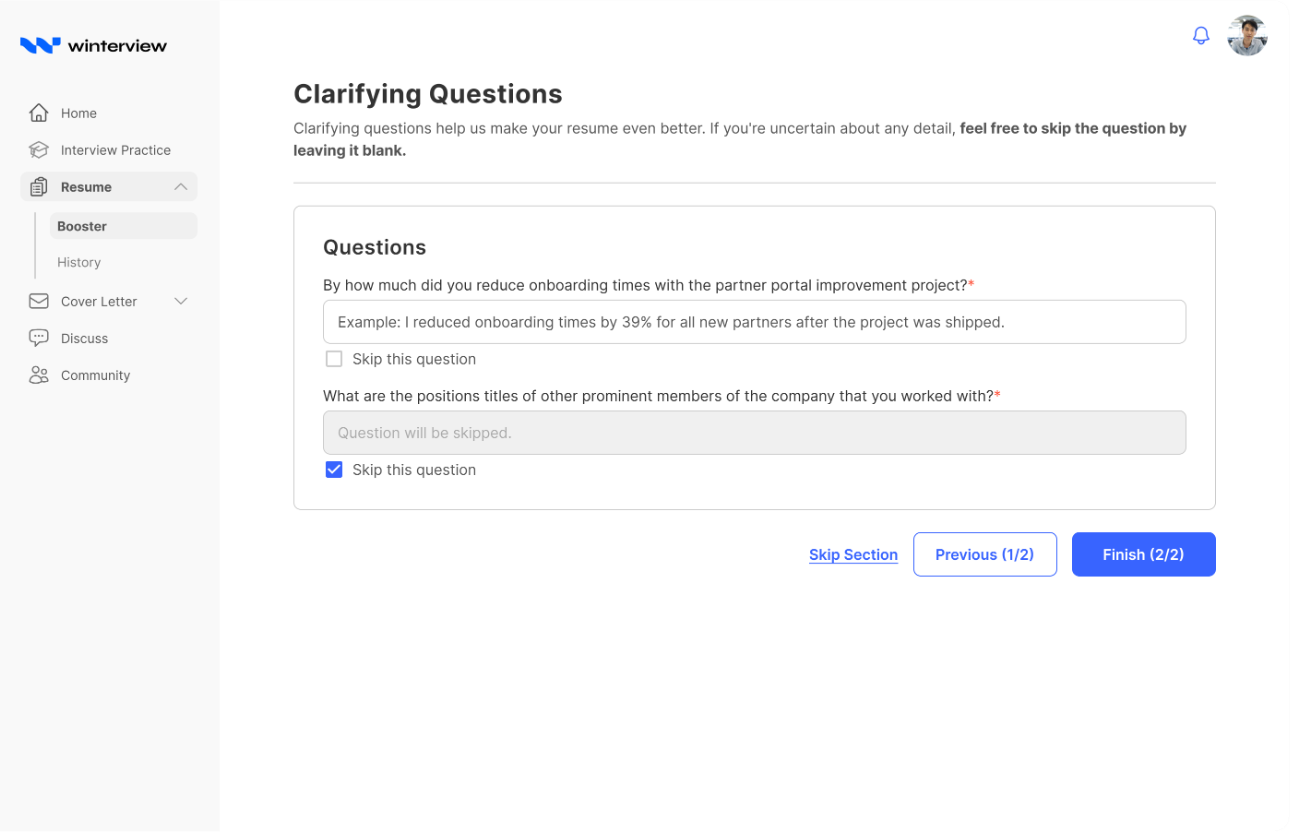
I dropped the framework and asked directly for what was missing. Instead of teaching users a four-part structure, the tool asks one plain question at a time, pointed at the specific gap in the bullet in front of them, like “What % did you improve X by?”
The shift is that the user no longer has to know what a good bullet is made of. The system knows what it's missing and asks for that one thing. Answering takes a sentence, not a taxonomy.
Four fields to fill, in order
One question, answered in a sentence
Both produce the same finished bullet. The difference is what the user has to know before they can start.
Two refinements after launch
Two changes once it was live: one for users who weren’t sure what a question was asking, one for the people writing three or more resumes a day.
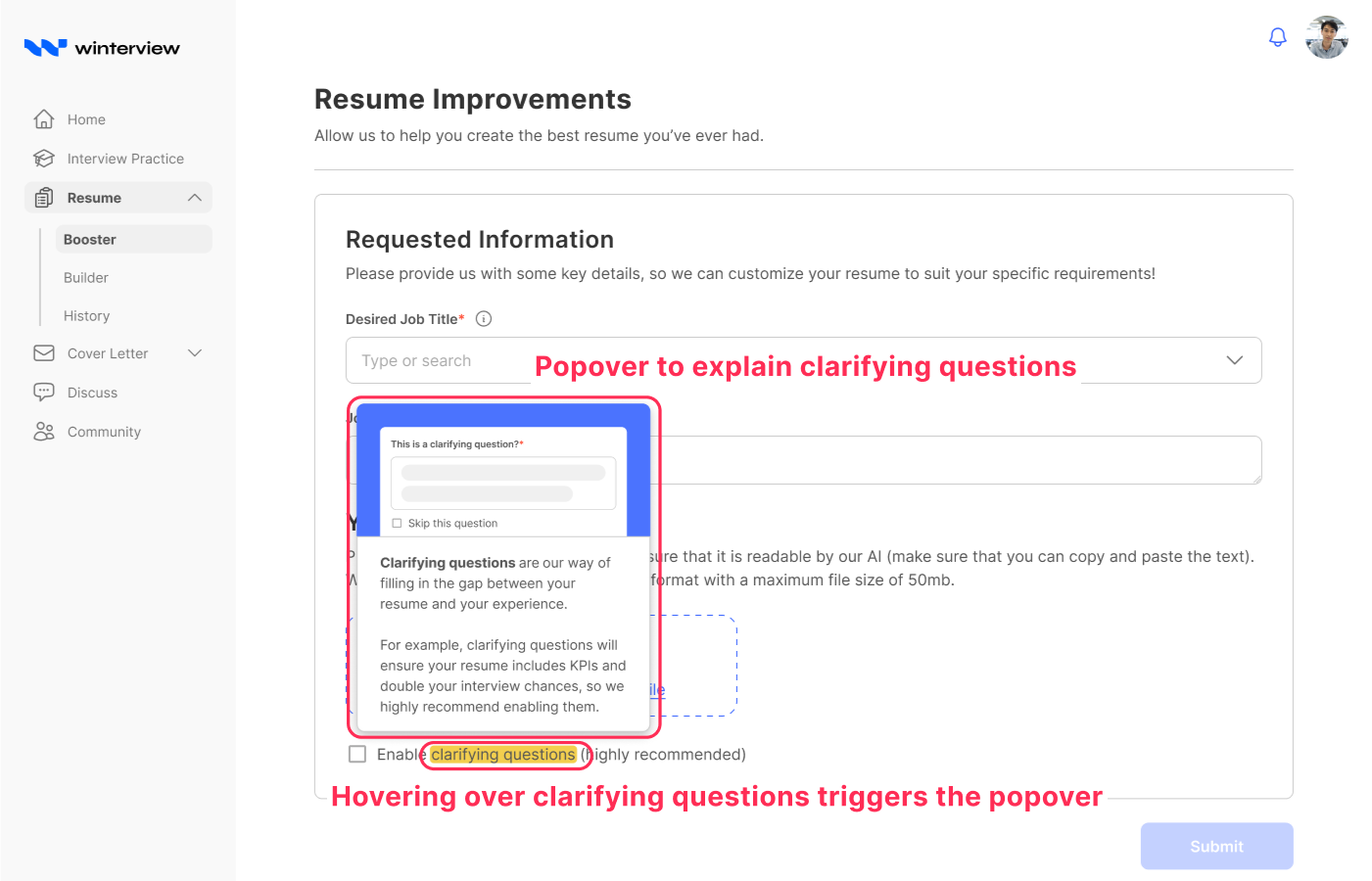
Users weren't always sure why a question was being asked or what a good answer looked like, so I explained the intent inline rather than making them guess.
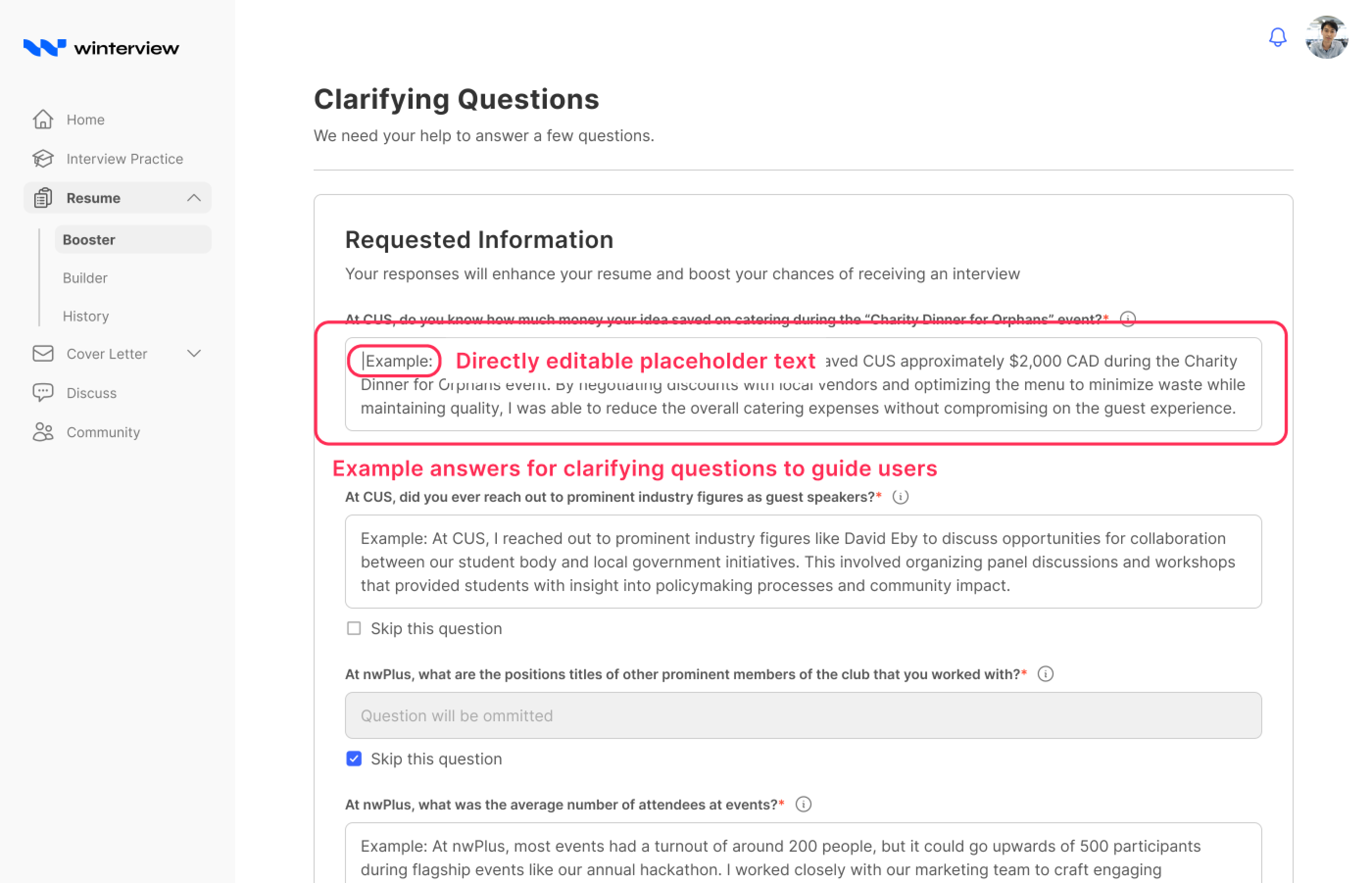
Power users, the ones writing three or more resumes a day, didn't need to start from a blank field every time. Pre-filled examples they could edit down cut the repetition out of high-volume work.
The result
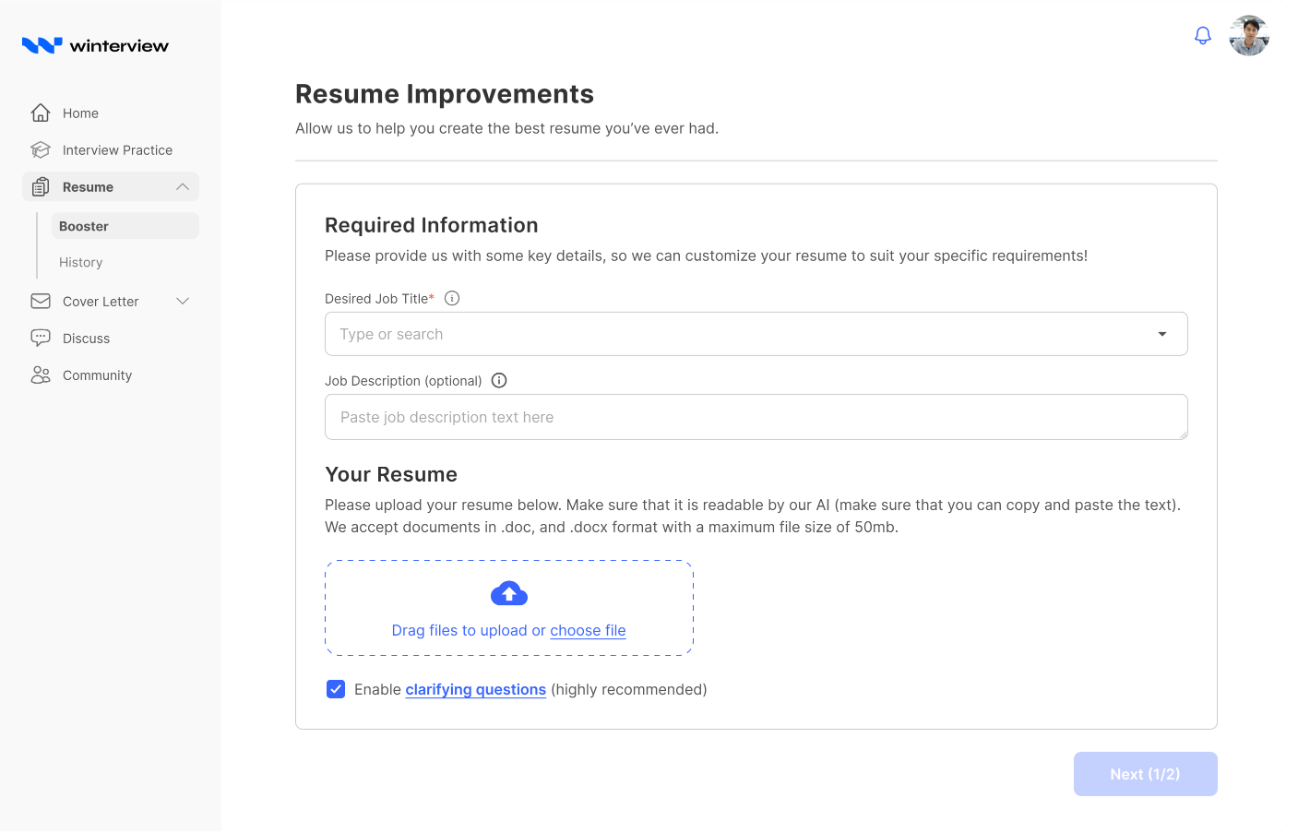
Clarifying Questions replaced the STAR flow entirely.
Want more detail on this one?
This page is the short version. I’m happy to walk through the usability data, the metric definitions, or anything else that didn’t make the cut.
Get in touch ↗